
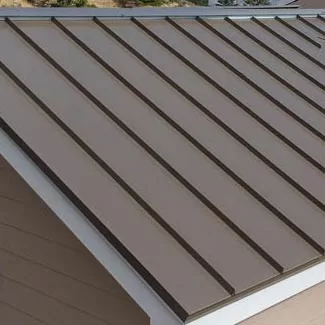
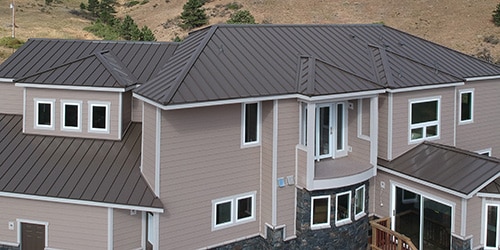
Short Answer: The coolest, or most energy-efficient, roof for Colorado is a standing-seam roof, since it offers the best solar reflectivity and heat emittance. As a result, they help to lower your summer cooling bill.
The climate is warming, and you’re wondering what you can do to lower your utility bill. Most folks think of their windows when they think of home energy efficiency, or using less water, or turning off the lights more often. And these are great things to do. However, what about your roof?
When most people in Colorado think of a cool or energy-efficient roof, they think of white shingles or galvanized sheet metal. These are cool roof options, but not your only options. It is true that white (and silver or galvanized) roofing reflects more heat than, for example, black, but there are other roofing materials that aren’t white or silver and are still energy-efficient and help lower your Summer utility bill.
As temperatures warm, we’re being asked more often about energy-efficient roof options in Colorado. Most commercial roofs are taken care of since they are white anyway. But what about residential or steep-sloped roofs? Below, we list all the ‘cool roof’ options we offer in Colorado, talk a bit about each, and rank them by how ‘cool’ they are. We also list the ‘hottest’ roofing materials – that is, which ones are the worst for reflecting heat away from your home and absorbing the most heat.
What is an Energy-Efficient Roof and How Are They Rated?
According to EnergyStar, an energy-efficient roof is one with a high solar reflectance value. This is also known as the solar reflectance index (SRI). Roofing materials can have an SRI value of 0 to 100. The higher the solar reflective value, the more efficient the product is at reflecting sunlight and heat away from the building and reducing roof temperature. Solar reflectivity is the most important characteristic of a roof’s ability to help lower your Summer cooling costs.
Emittance also comes into play. Emittance refers to a roof’s ability to release absorbed heat. This value is often expressed between values of 0 and 1, or 0% and 100%. The higher the emissivity number, the better the material is at releasing absorbed heat. Highly emissive roof products can help reduce your cooling costs by releasing the heat they absorb from the sun. A roof that’s hot to the touch will have a low emissivity value. Most roofing materials have emissivity values above .85 (85%).
The ‘coolest’ roof will reflect the most sunlight away. The colors closest to white will do this the best. The ‘coolest’ roof will also release the most absorbed heat. Let’s see what our energy-efficient roof options are for Colorado.
Energy-Efficient Roof Options for Colorado
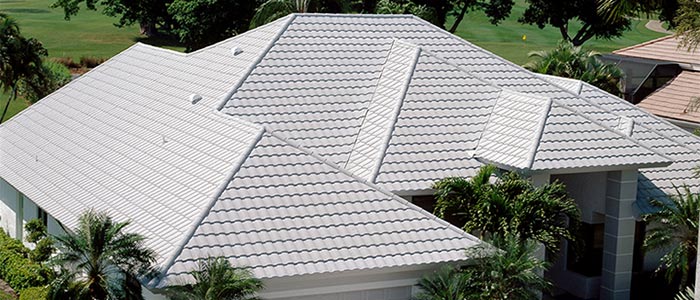
Not every roofing material from every manufacturer is available to us here in Colorado. Therefore, we’re only going to show the energy-efficient options available to us Coloradans. We’re also going to list them in order from best (mentioned first) to worst (mentioned last) for cooling your house.
Standing Seam
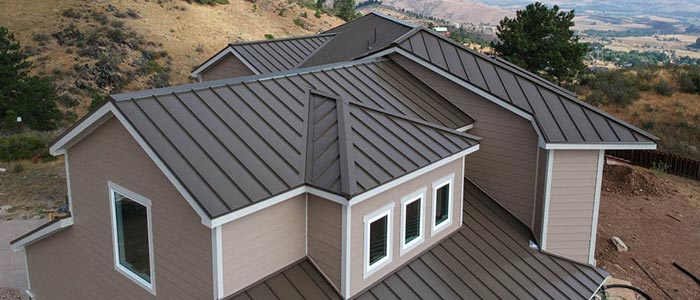
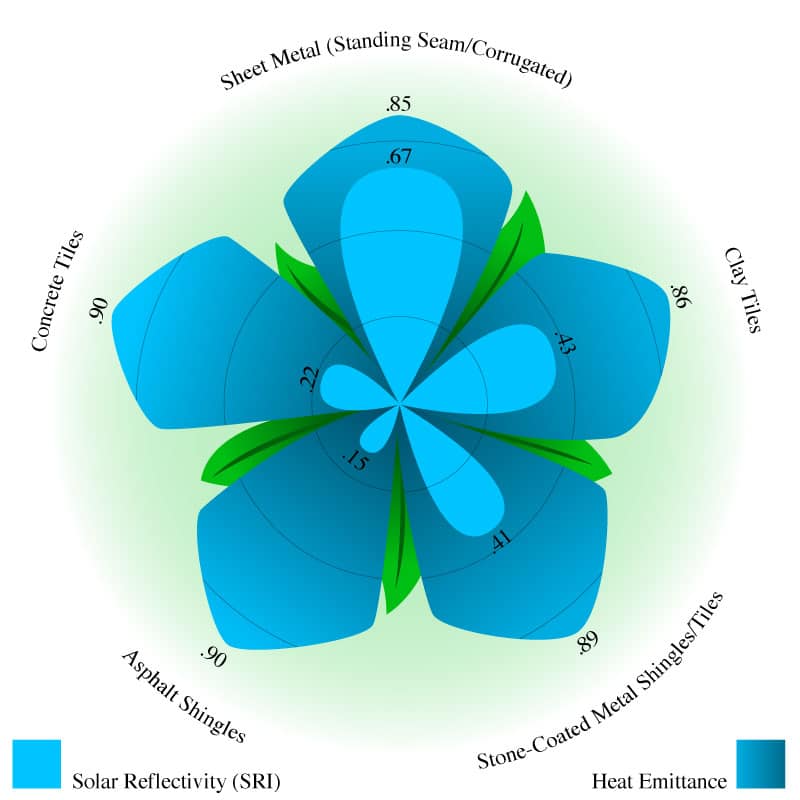
Sheet metal roofing, such as standing-seam roofing, is the coolest and most energy-efficient roof option. With sheet metal, there are gaps between the sheets and the roof deck, and between the sheets and the ridge vent. This allows air to flow around the metal, which cools it. What’s more, all metal roof colors are considered cool, not just white. Check out all the colors we offer for our standing-seam metal roofing panels. A metal roof has an average solar reflectance of .67 and an emissivity of .85.
Another nice thing about metal roofing panels is that they are recyclable in our area, unlike asphalt shingles. Recycling your old metal roof keeps it out of the landfill. And because they last longer than asphalt shingles, they often cost less in the long run, even though they cost more initially. 🙂
Stone-Coated Metal Shingles
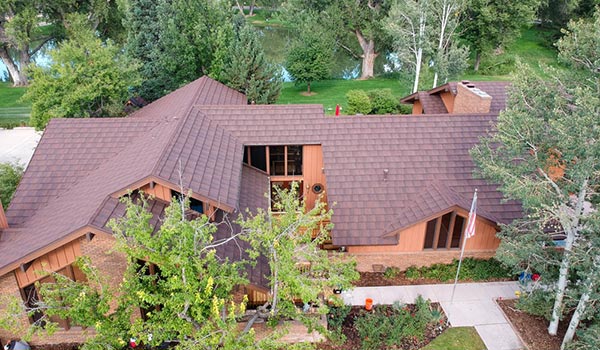
Because stone-coated metal shingles have a sheet-metal foundation rather than asphalt, their emissivity rating is often high. Also, there are gaps between the metal shingles. This helps to release hot air and cool the shingles. Westlake Royal Roofing’s Pine-Crest Shake stone-coated metal shingles in Ironwood have an emissivity of .89 and a reflectivity of .11. Although metal shingles and shake are more energy-efficient than traditional asphalt shingles, they’re not as energy-efficient as standing seam.
It’s worth noting that Westlake’s Barrel-Vault Tile in Dover (white) has a reflectivity of .41 which is significantly better than their other colors. Most stone-coated metal shingles have the lowest solar reflectivity among the roofing materials listed here. However, if you’re really interested in metal shingles, don’t mind the Spanish barrel look, and want to help lower your Summer cooling bill, these are worth your consideration. See the chart below. One thing metal shingles have going for them is that they are recyclable, even in our area.
Tiles
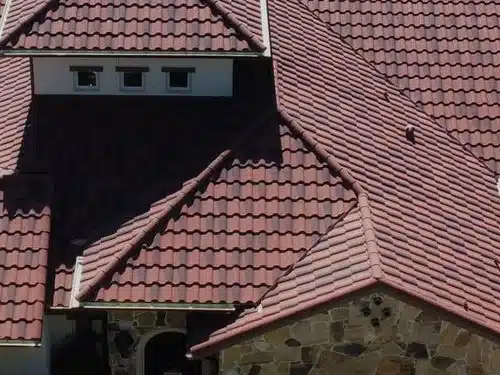
Between clay and concrete tiles, clay reflects more heat than concrete, which makes them more energy-efficient. Concrete tiles, on the other hand, do release slightly more heat. After reviewing each of Westlake’s clay tiles, their 1-Piece ‘S’ tiles in Old World 1 have a reflectivity of .43 and an emissivity of .86.
Comparing Westlake’s concrete tiles, their Barcelona tiles in Buckskin have a reflectivity of .22 and an emissivity of .90
Asphalt Shingles
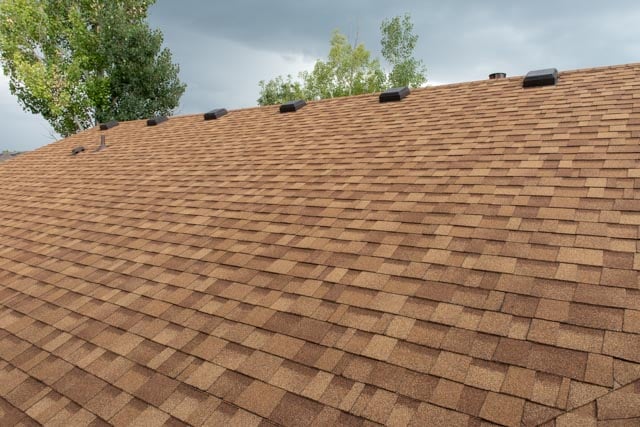
The Owens Corning website makes it very easy to find cool and energy-efficient roof shingles with the features and technologies you want. In this case, those that are Energy Star-rated. Thankfully, they have 3 ‘cool roof’ asphalt shingles. They range from economy to affordable to mid-range: the Supreme, Oakridge, and Duration, all in Shasta White. Their Shasta White color meets ENERGY STAR® requirements for initial solar reflectance of .25 and 3-year aged solar reflectance of .15. However, this is still very low and not nearly as good as white stone-coated metal shingles, clay tiles, or sheet metal. An emissivity rating was not available on the Owens Corning website at the time of this writing.
Until recently, CertainTeed’s Solaris line of asphalt shingles was an option for us Coloradoans. This includes their Landmark, Presidential, and Presidential TL. We hope CertainTeed will soon make these available to us again. Solaris shingles are rated by the Cool Roofing Rating Council (CRRC). What’s more, they come in colors other than white, such as Weathered Wood, Moire Black, Gray, Shake, and Tan, to name just a few.
So, What is The Most Energy-Efficient Roof for Colorado?
The coolest roof is the one with the highest solar reflectivity and heat emittance, and that’s standing seam! A standing seam metal roof also gives your Colorado home that classic western look. Metal also sheds heavy snowfall quickly if the pitch of your roof is great enough.
If you’re looking for a roof that lasts a long time, helps to cool your home and lower your utility bill, is recyclable in our area, and is resistant to hail, fire, rot, strong winds, and driving rain, you’re looking for standing seam.
The Bottom Line
A ‘cool roof’ is only part of the ‘energy-efficient home’ equation. Proper attic ventilation and insulation also important. If you’re looking to lower your Summer cooling bill and improve your home’s efficiency, contact us for a free inspection and estimate. For more cool roof research, visit https://coolroofs.solspace.net/directory/roof. If a roofing product is not on this site, it did not rate at a level that qualifies it to be cool.
If asphalt shingles are what you’re after, Owens Corning has a few cool roof options. Be sure to see their shingles in Shasta White, and check for availability in your area. Looking for something even cooler that will last longer? Go with white stone-coated metal shingles. Feeling really brave? Standing seam or corrugated/PBC metal is the ultimate cool roof for Colorado.
Energy-Efficient Roof Installation
Need a professional roofing company to install your new standing seam metal roof in Greeley, Colorado Springs, Cheyenne, or anywhere in between? Contact us for a free consultation and estimate.